At some point, almost every educator I’ve worked with wonders whether teaching is still the right fit. Teaching is a noble and rewarding profession, but it is also hard, and teachers often feel overlooked. It’s no wonder so many feel like their options are limited.
They aren’t. Sometimes all it takes is reimagining what a career in education can be. In this guide, you’ll find five ways to rethink your role in education by becoming a learning designer, growing your impact inside your own school, moving into education roles beyond the classroom, pivoting outside of education, and/or redefining what success means to you.
Whether you want to reignite the path you’re on or chart a completely new one, let’s start with clarity.
1. Shift from Content Expert to Learning Designer
For many of us, teaching starts with mastering our subject and delivering it, in an engaging way, with confidence. But over time, that role can start to feel a little rigid or even limiting. If you’re craving more creativity or connection, it might be time to reimagine yourself not just as a content expert, but as a learning designer.
Instead of focusing solely on delivering curriculum, see yourself as an architect of learning experiences. Think of your role as not just delivering content but curating and crafting richer, more engaging learning experiences.
Thinking of yourself as a learning designer can enhance your classroom teaching. It can also open up possibilities outside of the classroom. Here are some positions that this thinking lends itself towards:
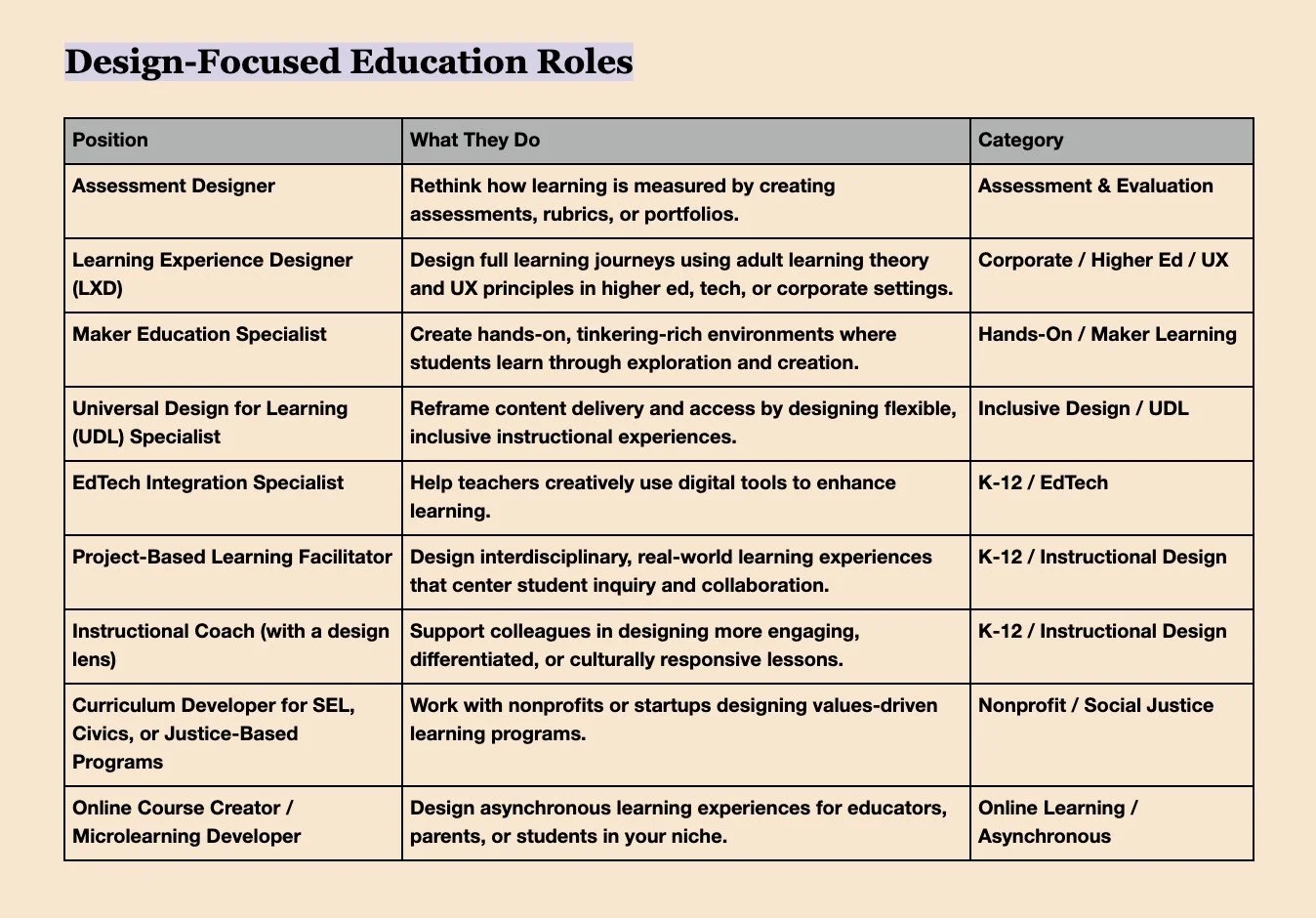
Design-Focused Education Roles
2. Expand Your Impact Within Your School by Aligning with Your Values and Strengths
Sometimes leaving your school is not the answer. But you can enhance your own career by leaning into your strengths and expanding your role right where you are. Maybe you’re the one others go to for tech support, curriculum ideas, or a steady presence. Use these instincts as clues. When you align your work with what comes naturally to you, it not only feels more fulfilling but it also opens up new opportunities for leadership and impact.
Expanding your impact means doing more of what energizes you. That could mean mentoring a new teacher, leading a professional learning group, supporting equity initiatives, or helping shape the school’s vision for social-emotional learning. These kinds of stretch roles can build your confidence, deepen your sense of purpose, and often lead to new pathways you hadn’t considered.
Some ways to expand your impact may include:
Mentor a new or student teacher → Share your wisdom and model best practices
Lead a Professional Learning Community (PLC)→ Guide collaborative planning and reflection
Support school-wide SEL implementation →Help shape how your school approaches emotional well-being
Take on a curriculum or instructional lead role→ Shape what and how students learn across classrooms
Pilot a new program or innovation → Be the early adopter who tests and shapes new ideas
Facilitate equity → Lead book studies, trainings, or affinity spaces
Support tech integration →Help colleagues meaningfully use tools that improve teaching
Be a testing or data liaison → If you’re analytically minded, help translate data into action
Start a club or elective based on your passion → Whether it’s art, social justice, or chess, bring something new to students
Lead restorative circles or peer mediation programs → Foster student voice and community-building
Plan school events or community partnerships →Use your organizing superpowers to build school culture
3. Education-Adjacent Careers Outside the Classroom
Staying in education doesn’t have to mean staying in a classroom. There are many impactful and fulfilling education roles that exist beyond school walls, in areas where your expertise can shine in new and exciting ways.
Whether it’s designing curriculum for an edtech company, facilitating professional learning for adults, or working with nonprofits that support students and families, there are countless opportunities to make a difference in education without being tied to a bell schedule. These roles often come with more flexibility, clearer boundaries, and fresh challenges, while still letting you live your purpose as an educator.
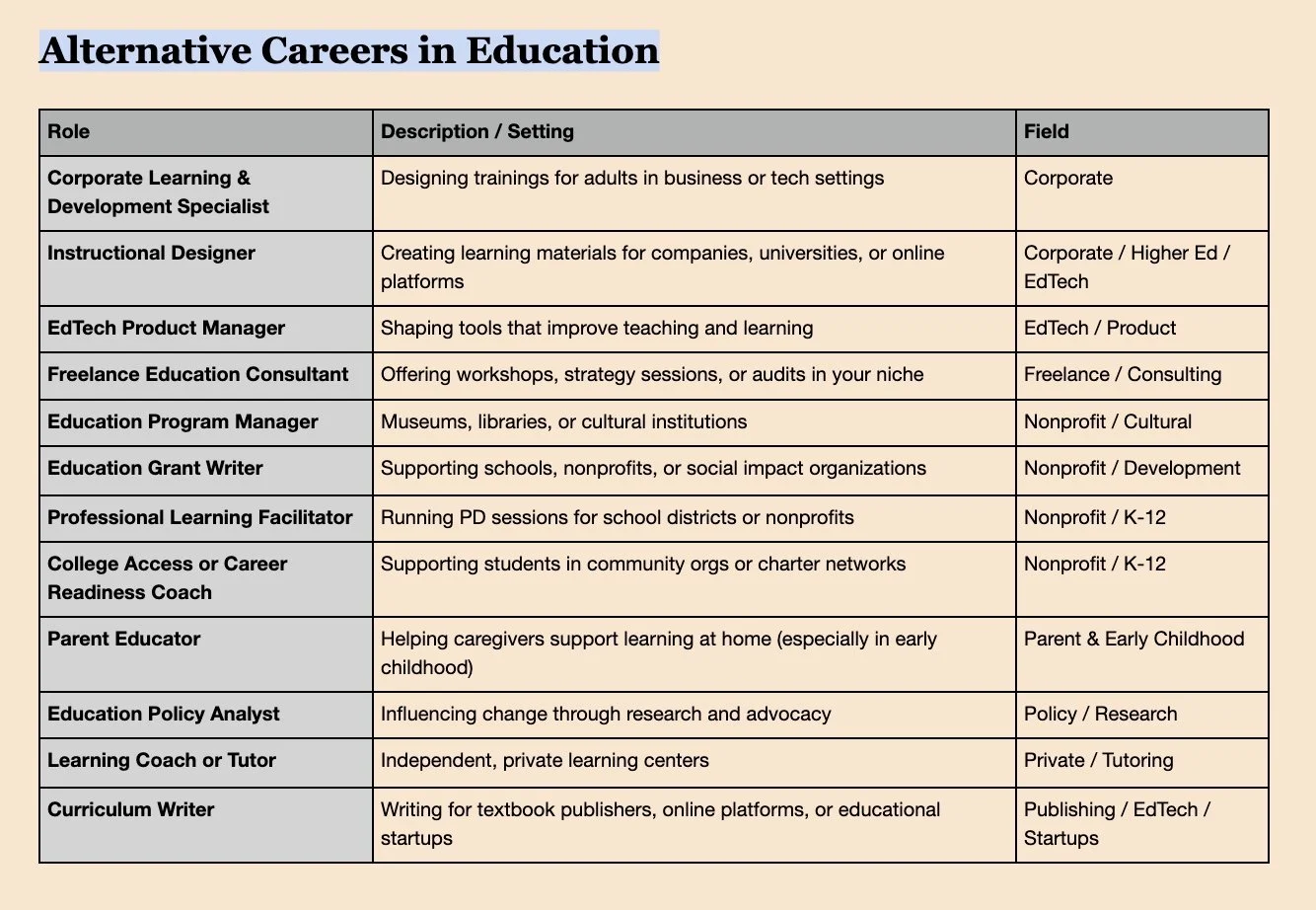
Alternative Careers in Education
Outside of the Classroom
4. Career Pivots Outside of Education
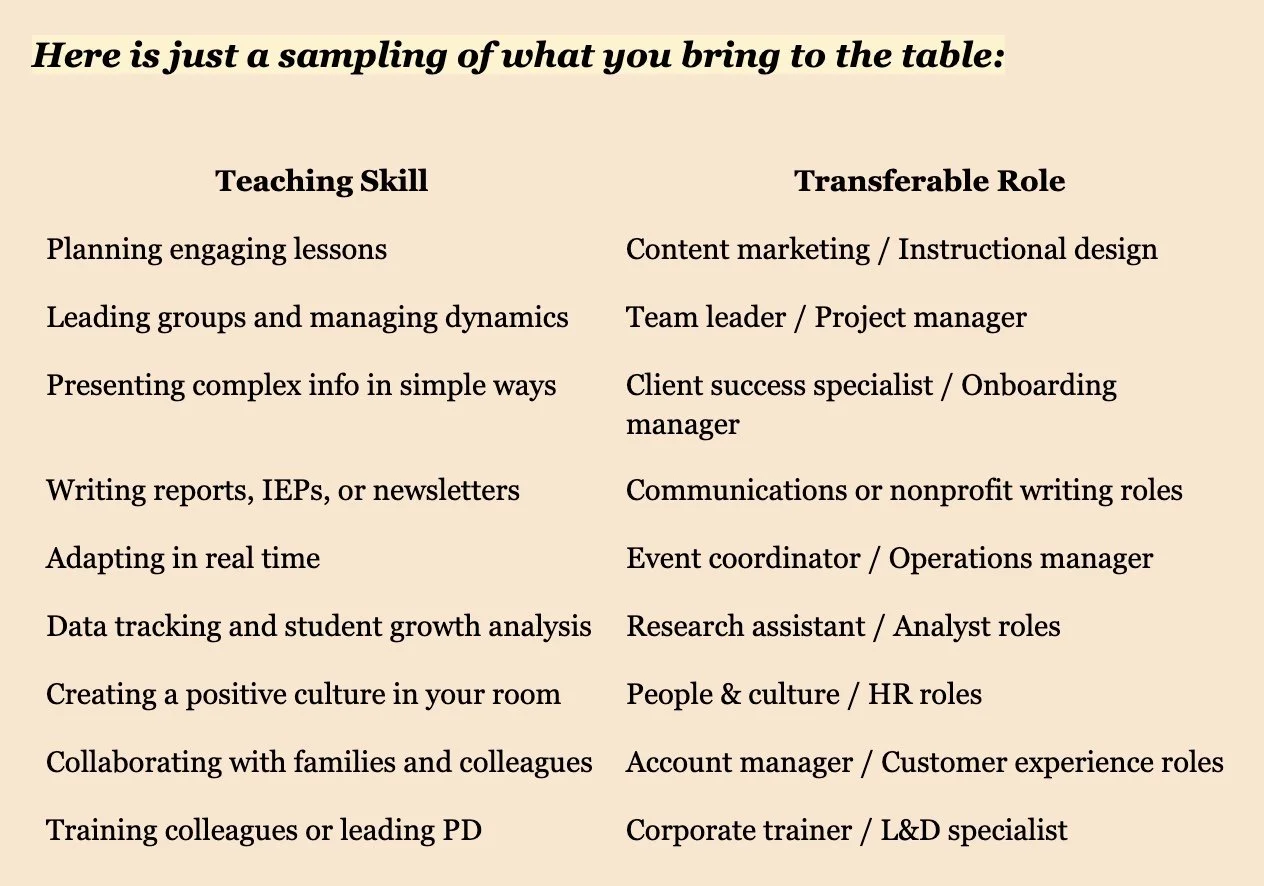
You have real-world skills companies and organizations are looking for.
If you’re ready for a bigger shift, you may be surprised at how transferable your teaching skills really are. Educators are exceptional communicators, problem-solvers, and multitaskers. These talents are in demand in a wide range of industries.
You don't have to start over because you’re building from a foundation of incredible, transferable skills.
5. Redefine What Success Looks Like and Examine Your Priorities
But before you throw it all away for that seemingly lucrative and easy corporate job your friends all go to every day, let's really break it down. There are many, many advantages to a career in education that you may not have in other settings. Yes, this means summers off! But there are other clear positives to a role in education that you may have overlooked.
Let go of external benchmarks and define success on your own terms. Success is sustainable when it aligns with your core values and what brings you joy. And we all have different metrics of success, so listen to what makes the most sense for you.